

The landscape of quality assurance has fundamentally shifted. In 2026, automated software testing with AI is no longer about simple script execution; it's about intelligent, autonomous agents redefining how we ensure software quality. This guide will walk you through implementing these transformative changes, focusing on practical steps and the strategic mindset required.
Step 1: Embrace Agentic QA — The New Core of Automated Testing
The first step in mastering automated software testing with AI is to fully embrace the concept of Agentic QA. This isn't merely an upgrade to existing automation frameworks; it's a paradigm shift towards systems that autonomously explore applications, understand their functionality, and verify integrity without constant human intervention. Tools like SmartBear’s BearQ exemplify this by adapting to code changes in real-time, drastically reducing the traditional maintenance burden.
Why this matters: Traditional test automation often creates a significant maintenance overhead. As applications evolve, test scripts break, requiring constant updates. Agentic QA systems, powered by AI, eliminate this "maintenance tax." They observe application behavior, learn the underlying structure, and dynamically adjust their testing approach. This allows your team to focus on higher-value tasks, moving beyond the reactive cycle of fixing broken tests.
Expected Result: A significant reduction in test maintenance effort and an increase in test coverage, particularly for complex, rapidly evolving applications. Your QA process becomes proactive, not reactive, discovering issues before they impact users.
Step 2: Implement Self-Healing Tests for Uninterrupted Flows
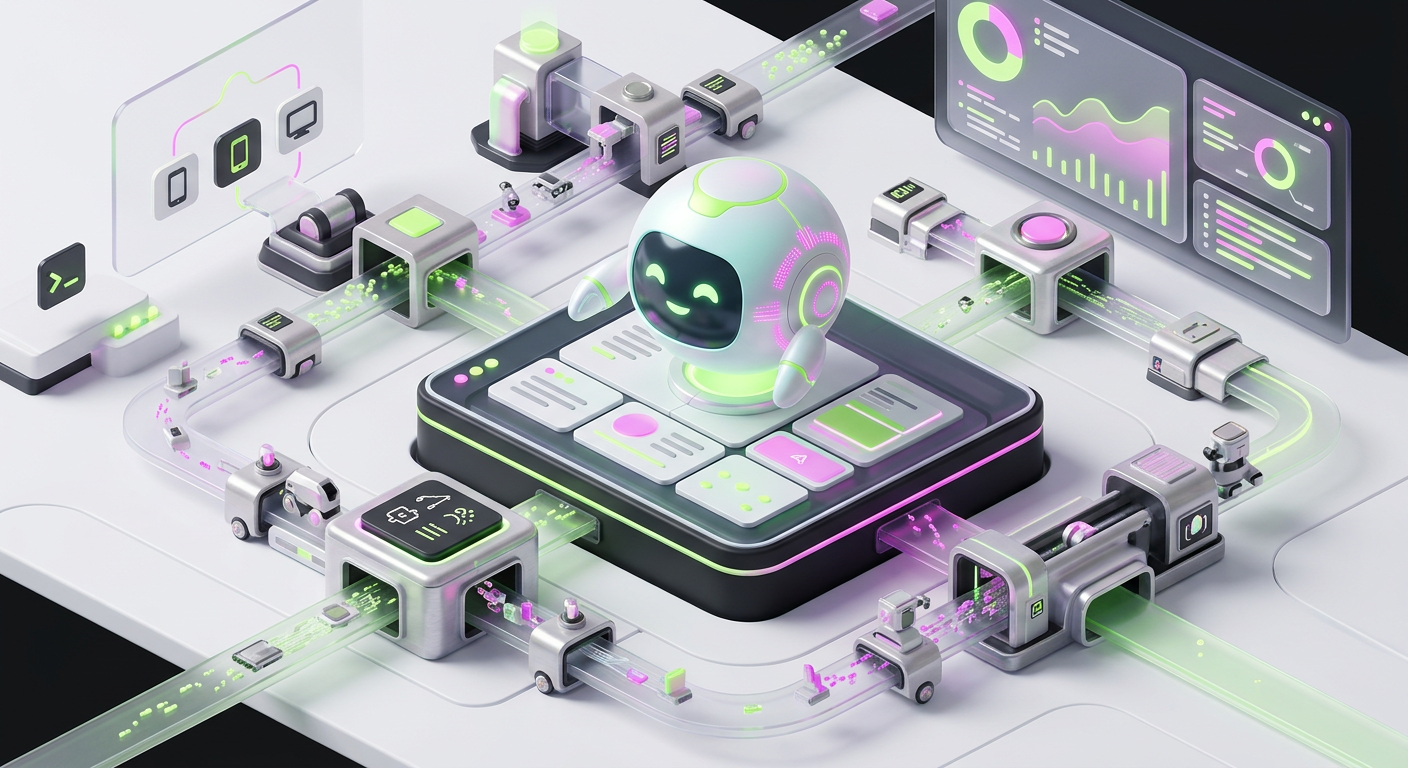
Once you understand Agentic QA, focus on integrating self-healing capabilities into your automated software testing with AI strategy. AI-driven tools leverage machine learning to detect changes in the user interface—element identifiers, layout adjustments, or even subtle behavioral shifts. They then automatically update the corresponding test scripts.
Why this matters: UI changes are a primary cause of test script fragility. A simple button relocation or a class name alteration can invalidate dozens of tests. Self-healing tests use AI to intelligently identify these changes and adapt the test script accordingly. This ensures your test suites remain robust and reliable, even in fast-paced development environments. My experience shows that these capabilities can turn weeks of script refactoring into mere hours of AI-driven adaptation.
Expected Result: Dramatically improved test suite stability and reliability. Your CI/CD pipelines will run with fewer false negatives caused by UI changes, leading to faster feedback cycles and more confident deployments.
Step 3: Shift to Bounded Risk Management for Non-Deterministic Systems
The era of binary "pass/fail" metrics is over, especially with the rise of non-deterministic AI systems. Your third step is to adopt a bounded risk management approach for automated software testing with AI. This means verifying that a system behaves within acceptable boundaries of safety, relevance, and accuracy, rather than aiming for 100% deterministic testability.
Why this matters: Many modern applications, particularly those incorporating AI components, exhibit non-deterministic behavior. Their outputs can vary slightly even with identical inputs, making a strict pass/fail criterion impractical and often misleading. By defining acceptable bounds for performance, accuracy, and user experience, you gain a more realistic and actionable understanding of system quality. This aligns with the industry consensus of 2026, where AI quality is defined by confidence levels.
Expected Result: A more nuanced and accurate assessment of system quality, particularly for AI-driven features. You move from a rigid, often failing, pass/fail model to a flexible, risk-aware validation process that truly reflects real-world application behavior.
What are the key differences between traditional and AI-driven automated testing?
Traditional automated testing relies on explicitly coded scripts that follow predefined paths and assert specific outcomes. Any deviation, such as a UI change or an unexpected data response, typically causes a test failure. AI-driven automated testing, conversely, uses machine learning and generative AI to understand application behavior, adapt to changes, and even generate new test scenarios. It moves beyond strict deterministic checks to evaluate systems within defined risk boundaries, offering greater resilience and coverage for complex, evolving software.
Step 4: Leverage Generative AI for Exhaustive Test Scenario Generation
Integrate Generative AI (GenAI) into your automated software testing with AI workflow to unlock unprecedented test scenario generation capabilities. GenAI can convert user stories directly into comprehensive test scenarios, expand positive paths into crucial edge cases, and draft "test skeletons" for frameworks like Playwright.
Why this matters: Humans, by nature, have blind spots. Even the most experienced QA engineers can overlook subtle interactions or obscure edge cases. AI, however, can automatically generate exhaustive test scenarios by examining application code, user behavior patterns, and business flows. This capability ensures a depth of testing that is simply unachievable through manual effort or traditional script-based automation. My team has seen GenAI identify critical vulnerabilities in areas we previously considered thoroughly covered.
Expected Result: A dramatic expansion of your test coverage, particularly for complex user flows and edge cases. You will uncover defects earlier in the development cycle, leading to higher quality releases and reduced post-production issues.
Step 5: Prioritize Testing with Predictive Insights
To optimize your automated software testing with AI, use predictive insights. AI analyzes historical defect patterns, code changes, and development velocity to identify and prioritize high-risk areas within your application. This ensures that the most critical parts of your system receive the most rigorous testing, especially within your CI/CD pipelines.
Why this matters: Not all code changes carry the same risk. Some modifications are isolated and low-impact, while others can introduce widespread regressions. AI-driven predictive analytics help you focus your testing efforts where they matter most, maximizing the efficiency of your test cycles. This is particularly vital in rapid development environments where every second in the pipeline counts. It ensures that your limited testing resources are always applied to the areas most likely to fail.
Expected Result: Optimized test execution within CI/CD, leading to faster feedback and more efficient resource allocation. You will gain a clear understanding of the risk profile of each build, allowing for informed release decisions.
Advanced Tips and Common Pitfalls in Automated Software Testing with AI
Integrate AI-First Editors for Real-time Assistance
Consider adopting AI-first development environments, such as Cursor, that integrate AI directly into the coding process. These tools offer real-time AI-assisted coding and test generation, accelerating both development and testing simultaneously.
Why this matters: The line between development and testing blurs with AI. By having AI assist in code generation and test generation concurrently, you embed quality from the very beginning. This shifts the "test left" principle into a "test with development" reality, catching issues as they are introduced, not after the fact.
Don't Underestimate the Human Element
While automated software testing with AI excels at generating exhaustive scenarios and managing complex data, human judgment remains paramount. AI can identify technical deviations, but only a human can truly assess "brand appropriateness," "business logic relevance," or the subjective quality of user experience. Treat AI as an augmentation, not a replacement, for your QA engineers. The "human-in-the-loop" ensures that the AI's output aligns with strategic business objectives.
Avoid Over-reliance on Black-Box AI Testing
While autonomous agents are powerful, ensure you maintain visibility into their operations. A common pitfall is treating AI testing as a black box, accepting its results without understanding the underlying logic or scenarios it generated. Regularly review AI-generated test reports and scenarios to ensure they align with expected coverage and business priorities. This transparency builds trust and allows for continuous improvement of your AI testing strategy.
Scale Your Infrastructure for Concurrent Testing
AI-driven testing often generates thousands of test cases. Ensure your infrastructure can handle this scale. Cloud testing platforms, for instance, can target over 3,000 browsers simultaneously, a capability essential for maximizing the benefits of AI-generated tests. Without adequate infrastructure, your AI's potential for exhaustive testing will be bottlenecked.
The Future is Confidence, Not Perfection
As of March 2026, the industry has moved towards defining quality by confidence levels and bounded risk. Do not strive for an unattainable 100% testability, especially with non-deterministic systems. Instead, focus on building high confidence in critical areas and managing acceptable risk levels across the application. This pragmatic approach leads to more efficient testing and faster delivery cycles.