
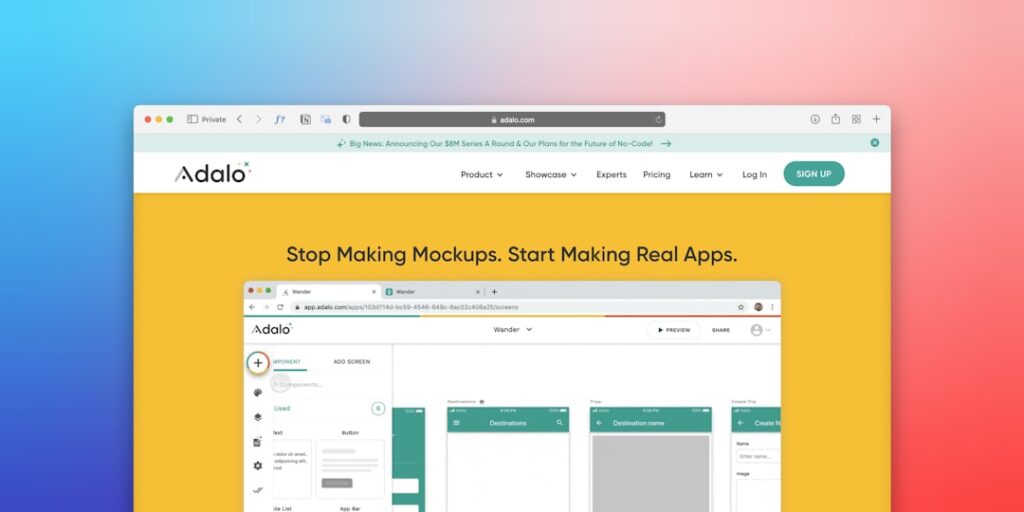
The landscape of software creation has undergone a seismic shift as we move through 2026. Gone are the days when building a functional application required months of manual syntax writing and deep architectural knowledge. Today, the rise of no-code/low-code AI tools has introduced an era of "vibe coding," where natural language is the primary programming interface. This transition allows entrepreneurs and internal teams to transform a conceptual "vibe" into a fully functional, scalable product in record time.
Historically, creating a custom web application was a luxury reserved for those with deep pockets or specialized engineering teams. However, market analysis shows the sector for custom web app development is surging toward a projected $898.9 billion by 2029. This growth is largely fueled by the accessibility of these new intelligent platforms. Consequently, the barrier to entry has dropped from a $50,000 investment to the cost of a monthly subscription and a few hours of clear thinking.
What happened to traditional development?
In the past, no-code platforms relied on rigid, drag-and-drop templates that often felt like building with plastic blocks. If you wanted a feature that wasn't in the box, you were out of luck. In contrast, the 2026 generation of no-code/low-code AI tools functions more like a master architect who understands your intent. These tools do not just hide the code; they generate high-performance React and TypeScript code that is production-ready from the start. This allows creators to develop an app with AI using professional-grade frameworks without manual coding.
Furthermore, the industry has moved toward "agentic workflows." Unlike simple search-based systems, these modern agents operate in autonomous loops. They can decide which actions to take based on a specific goal, such as managing a user's subscription or processing complex data. This shift means that the apps we build today are not just static interfaces but dynamic systems capable of reasoning. At ararama, we have observed that this autonomy is what truly separates 2026 tools from their predecessors. For a deeper look at these systems, see this practical guide to AI agents.
Foto de Team Nocoloco no Unsplash

What has actually changed in the workflow?
The technical backbone of app development now utilizes what experts call "hybrid inference." Previously, every AI interaction had to travel to a massive data center in the cloud, causing delays and high costs. Now, modern web apps run smaller AI models directly on the user's device via the browser. Therefore, the cloud is only engaged for heavy lifting, which significantly improves privacy and reduces operational expenses for the developer. Google provides a detailed breakdown of how to build hybrid experiences in web apps using this on-device logic.
Another notable change is the introduction of "Generative Pages" within enterprise platforms. Instead of manually placing buttons and linking databases, users provide a text prompt. The AI then selects the appropriate React-based components and logic to build the page instantly. Microsoft has pioneered this by building generative pages in Power Platform, effectively removing the need for manual UI assembly. Similarly, the retirement of older models like Gemini 2.0 Flash in favor of more efficient versions like gemini-2.5-flash-lite ensures that these apps remain fast and cost-effective.
Foto de Rubaitul Azad no Unsplash

How does this affect the average creator?
For the reader, the most striking impact is the sheer speed of execution. A project that once required three to twelve months can now reach the market in one week to one month. Specifically, companies utilizing these scalable custom apps report a 32% increase in operational efficiency according to Gartner data. This is because the software is tailored exactly to their business logic rather than forcing the business to fit into a pre-made software mold. Moreover, the cost difference is staggering, with AI-driven projects costing around $2,000 compared to the $100,000 price tag of traditional custom builds.
However, this new power comes with the responsibility of clear communication. Since you are "vibe coding," the quality of your app depends on the clarity of your instructions. You must define the "Minimum Viable Agent Loop"—the specific events, policies, and actions your app must handle. If you can describe your business process accurately, the no-code/low-code AI tools can build it. This democratization means that the competitive advantage is no longer who has the best coders, but who has the best ideas and the most efficient processes. For those starting from scratch, following a no-code guide can help structure this initial logic.
Bottom line and recommendations
If you are looking to launch a product in 2026, the path is clear: start with an AI-first approach. Begin by mapping out your user journey and the specific data you need to collect. Use platforms that allow for code export, ensuring that you are never locked into a single vendor. While these tools are powerful, remember that 79% of web apps require secure authentication, so prioritize security configurations from day one. Understanding what a no-code app builder is and its limitations is essential for long-term scalability.
Ultimately, the transition from "vibe" to production is faster than ever. We recommend starting with a small, focused MVP (Minimum Viable Product) to test your logic before scaling. For more insights on how these technologies are reshaping the digital economy, stay tuned to ararama for the latest updates. The future of development is no longer about writing lines of code; it is about directing the intelligence that writes them for you.