

The shift from AI hype to quantum reality
For the past few years, the global conversation has been dominated by artificial intelligence. While these discussions are undoubtedly important, the repetitive nature of the AI narrative has become somewhat exhausting for those looking for the next genuine leap in technology. There has been much discussion, in an extremely tedious way, about AI's potential, but the underlying infrastructure often struggles to keep up. However, a more profound shift is occurring quietly. As of March 2026, the global quantum computing market has surpassed $10 billion, signaling that this technology is no longer a distant scientific dream.
Quantum computing applications are now moving into the corporate mainstream, providing the computational muscle that classical systems simply cannot offer. While AI is excellent at identifying patterns in historical data, it often falters when faced with high-dimensional optimization problems. Consequently, industry leaders are beginning to realize that the future of technology does not lie in AI alone. Instead, it lies in the synergy between classical machine learning and the raw, probabilistic power of quantum processors. This transition marks a departure from the repetitive AI debates of the early 2020s toward a more robust and integrated technological era.
What has actually changed in the quantum landscape?
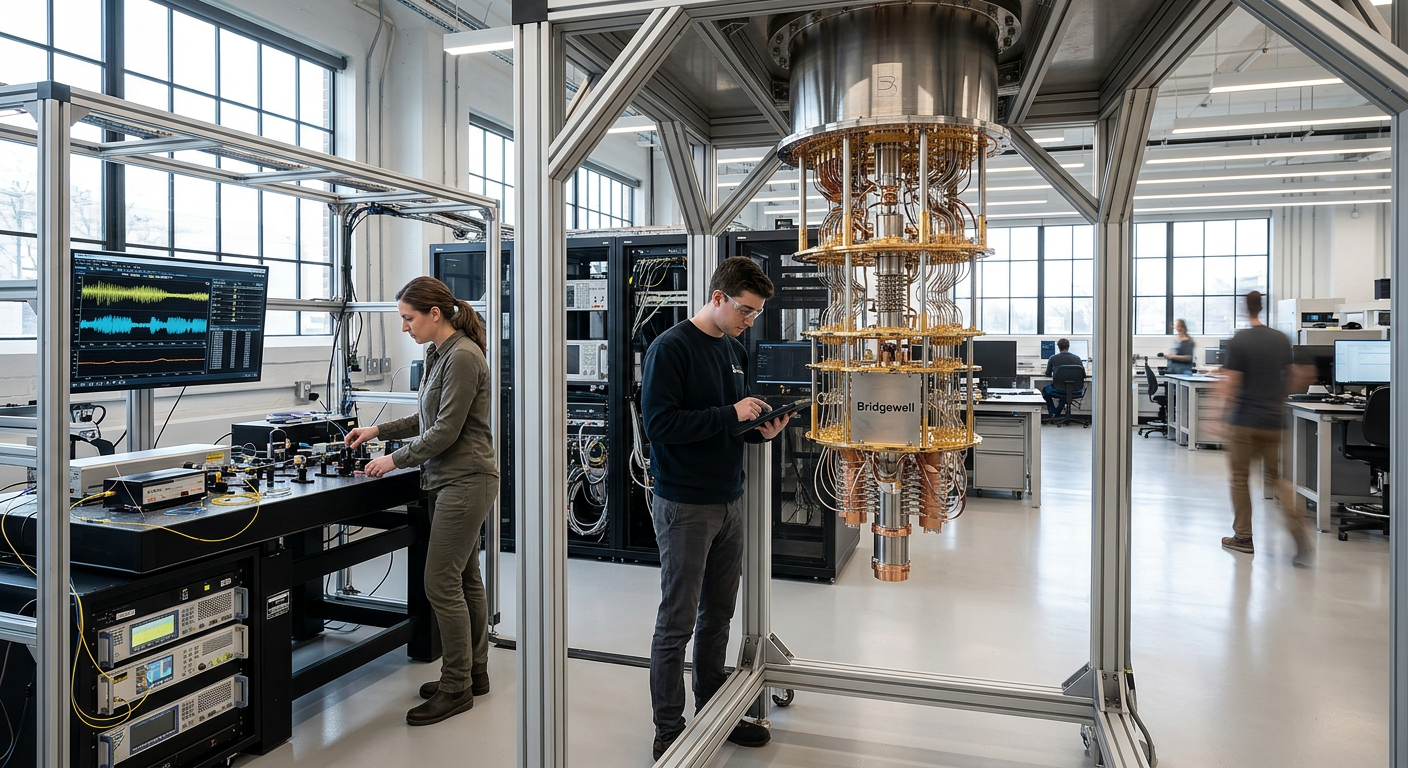
Technically, the most significant milestone of 2026 is the emergence of quantum-centric supercomputing. On March 12, 2026, IBM released a reference architecture that officially integrates Quantum Processing Units (QPUs) with traditional CPUs and GPUs. This hybrid approach is a major departure from the previous era, where quantum computers were isolated experiments in specialized labs. Now, these systems work in tandem with the hardware we already use, allowing businesses to offload specific, complex tasks to quantum chips while maintaining standard operations on classical servers.
Furthermore, the hardware itself has reached a level of reliability that was previously unthinkable. We are seeing superconducting systems with over 1,300 qubits, such as those from IBM and Google, alongside more accessible options for research. For instance, SpinQ is working toward making 6-qubit platforms available for under $100,000, which will democratize access for smaller teams. In addition, the launch of the Quantum Transducer by QphoX has solved a long-standing infrastructure hurdle. This device allows quantum information to travel over standard optical fiber at room temperature, effectively creating the foundation for a distributed quantum internet.
How quantum computing applications affect the modern business
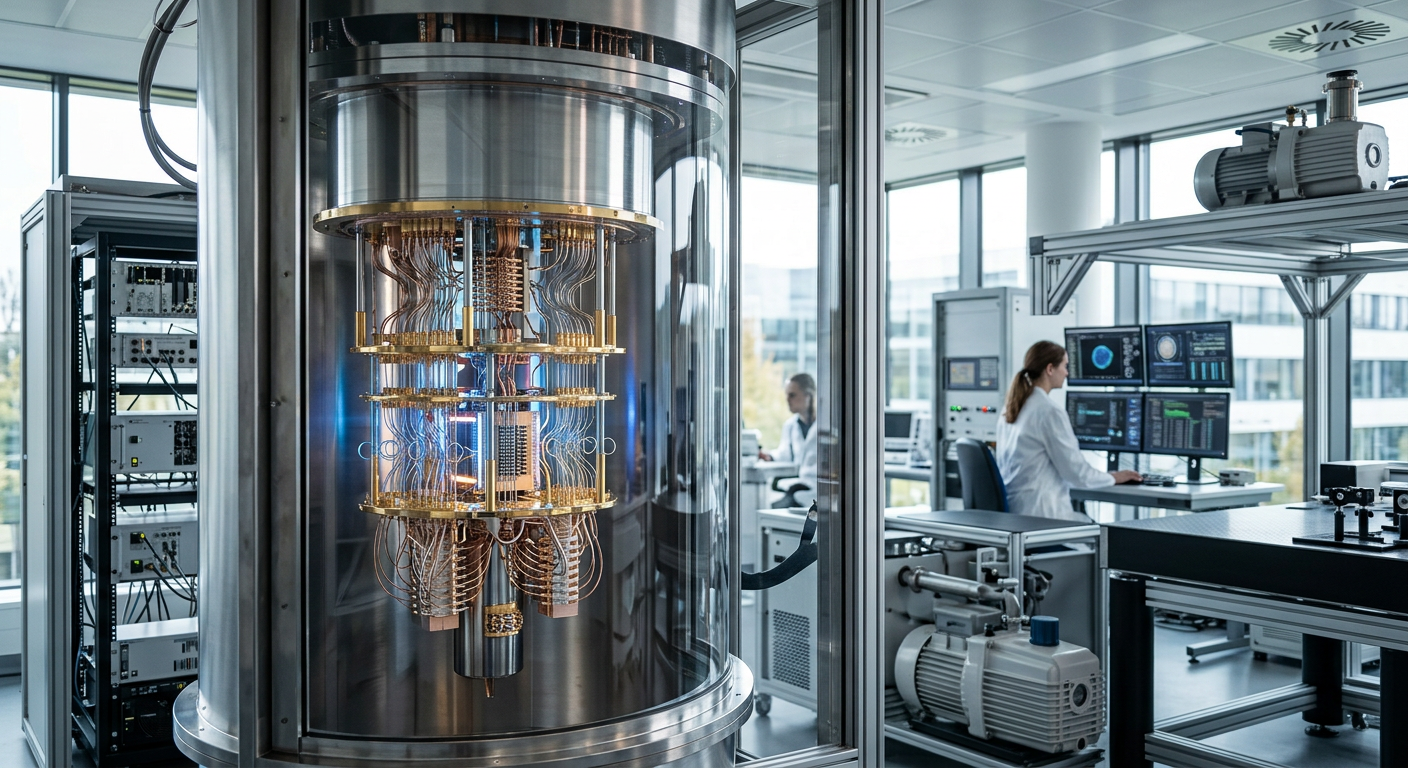
Many organizations find that current AI models are becoming too expensive and energy-intensive to maintain. This is where quantum computing applications provide a practical solution for the corporate world. Recently, a D-Wave system completed a complex simulation using only 12.5 kilowatts of power—roughly one dollar’s worth of electricity. A classical supercomputer would have required more energy than the entire planet consumes in a year to perform the same task. Therefore, quantum is not just a performance upgrade; it is an essential tool for environmental and financial sustainability.
In practical terms, this affects how companies handle logistics, pricing, and risk management. While your AI might suggest a general strategy, a quantum system can optimize the exact delivery routes for thousands of vehicles in real-time, accounting for variables that would crash a traditional server. Moreover, the medical field is already seeing the benefits. IonQ’s systems have recently outperformed classical high-performance computing in medical device simulations, leading to faster breakthroughs in patient care. For the average professional, this means that the tools you use will soon become significantly faster and more accurate without the massive carbon footprint currently associated with large-scale data centers.
Addressing the hidden security risks
Despite the excitement, we must address a pressing concern that many organizations are currently overlooking. Cybersecurity experts are increasingly worried about the "Harvest Now, Decrypt Later" (HNDL) strategy. In this scenario, malicious actors steal encrypted data today with the intention of decrypting it once quantum hardware becomes powerful enough to break current encryption standards. Consequently, the US Federal Government has mandated a full migration to Post-Quantum Cryptography (PQC) by 2035. According to market analysis from CIO.com, this is a strategic priority that requires immediate attention from every Chief Information Officer.
Transitioning to quantum-safe standards is a complex process that involves updating every layer of a company's digital infrastructure. Nevertheless, ignoring this shift could leave sensitive corporate data vulnerable to future attacks. The window for a safe transition is closing. Organizations that act now to implement PQC will be the ones that thrive in an era where quantum decryption is a reality. This proactive approach is the only way to ensure long-term data integrity in an increasingly quantum-capable world.
Bottom line
The era of treating quantum computing as a curiosity is over. By 2026, the technology has proven itself as the necessary partner to artificial intelligence, offering the optimization and energy efficiency that classical systems lack. From IBM’s new supercomputing blueprints to the practical gains in medical simulations, the evidence is clear: quantum is the silent engine driving the next frontier of innovation. We recommend that business leaders move beyond the repetitive AI cycle and begin investing in quantum readiness today. Whether through exploring hybrid cloud-quantum services or auditing your current encryption, the time to prepare for the quantum-centric future is now.