
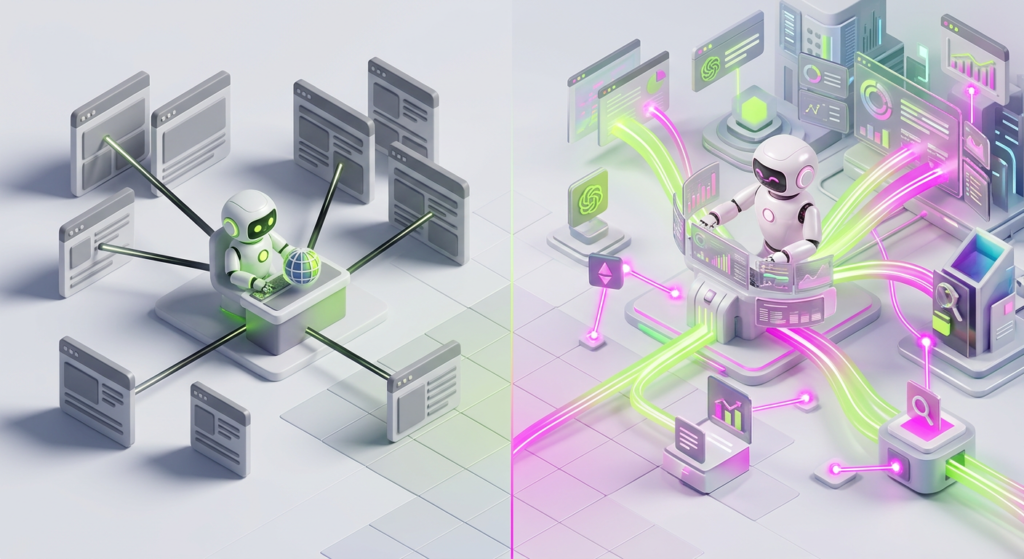
The digital landscape is undergoing a structural fracture. As of March 2026, a critical divergence in how ChatGPT's default and premium models access and cite web sources has created a two-tiered internet. This shift fundamentally alters the dynamics of online visibility. Traditional SEO strategies, while still relevant for a broad audience, are increasingly invisible to the most engaged AI users. For any tech blog or digital enterprise, this isn't just a technical update—it is a total reconfiguration of how information is discovered.
The Fundamental Disparity in AI Search
Recent analysis from Writesonic and ALM Corp reveals a stark reality: ChatGPT’s default (GPT-5.3 Instant) and premium (GPT-5.4 Thinking) models share only 7% of their cited sources for identical queries. This 93% probability of citing different websites for the same question represents a structural split in how these AI agents perceive the web. Understanding this distinction is paramount for maintaining a competitive tech blog in 2026.
GPT-5.3 Instant, the default for all logged-in users since March 2026, processes queries broadly. It favors third-party content—blogs, review sites, and aggregators like Forbes or TechRadar. Its search behavior aligns closely with conventional search engine results, with 47% of its citations overlapping with Google Search. It acts as a high-speed aggregator, pulling from the most visible layers of the traditional web.
GPT-5.4 Thinking, available to Plus, Pro, Team, and Enterprise users, employs an agentic web search approach. This model deconstructs prompts into an average of 8.5 sub-queries. It actively uses the site: operator to target specific domains. This sophisticated method means 75% of GPT-5.4’s citations do not appear in traditional Google or Bing results for the same prompt. It signals a deliberate move away from conventional SEO rankings toward targeted data extraction.
Why This Matters: Impact on Brands and Content
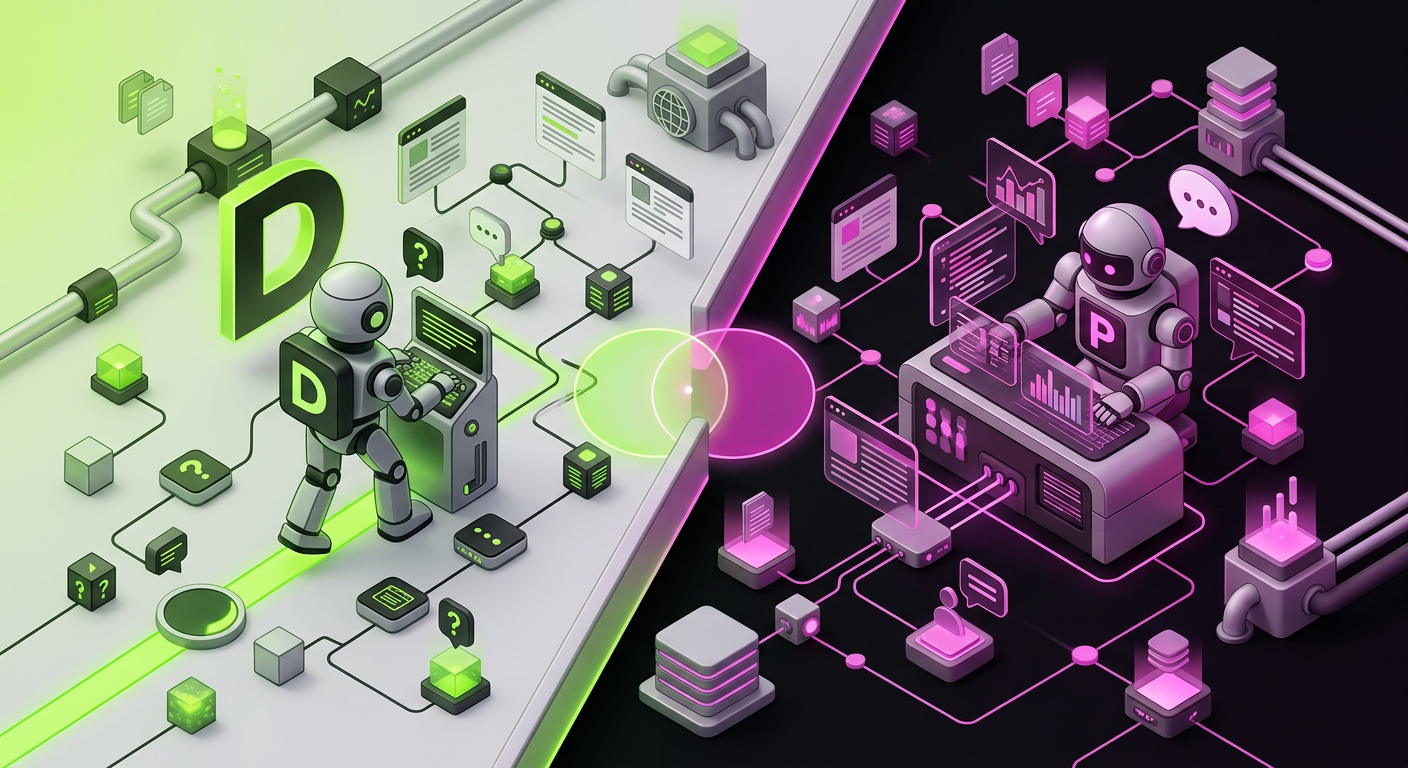
This divergence has profound implications for how brands structure online content. The premium model, GPT-5.4, exhibits a clear bias toward first-party brand content—homepages, pricing pages, and product descriptions. GPT-5.4 directs 56% of its citations to brand websites. In contrast, GPT-5.3 sends only 8% to such sites. The premium model bypasses the middleman to find the source of truth.
Consider the practical impact: in head-to-head SaaS comparisons, the default model cited zero brand websites. The premium model cited them almost exclusively. GPT-5.4 cited 138 pricing pages, whereas GPT-5.3 referenced only four for the same dataset. This 35x difference underscores a critical shift. If your brand’s essential information—like pricing or product specifications—is not directly accessible on your site, it is effectively invisible to the most advanced AI models.
Premium AI is not merely searching; it is actively seeking structured, authoritative information directly from the source. This departs from merely aggregating information from third-party reviews. These reviews often summarize or interpret brand data, adding a layer of noise that the Thinking model is designed to filter out. For a tech blog, this means your technical documentation might be more valuable for SEO than your high-level marketing posts.
The Rise of Agentic Data Readiness
The site: operator discovery within GPT-5.4’s search strategy represents a paradigm shift. It indicates that advanced LLMs act as autonomous researchers. This necessitates a new approach: Agentic Data Readiness (ADR). ADR is the practice of preparing your digital infrastructure for autonomous agents that prioritize data accuracy over keyword density.
What does Agentic Data Readiness entail? It means optimizing your website for AI agents designed to extract specific data points. This includes:
- Clear, Public Pricing Pages: Avoid gated content or "contact sales" forms for basic pricing. The study notes GPT-5.4 struggles with gated pricing, suggesting a penalty for lack of transparency.
- Structured Product Information: Ensure product specifications, features, and benefits are clearly laid out. Use structured data formats that are easily parsable by AI agents.
- Authoritative Brand Content: Prioritize your official website as the primary source of truth. This includes company history, mission, and official statements.
- Direct Answers: Anticipate factual questions an AI might ask about your products. Provide direct, unambiguous answers on your site to ensure the agent doesn't have to guess.
This approach complements traditional SEO. While GPT-5.3 serves the vast majority of ChatGPT’s 900 million weekly active users, the premium model targets a smaller but highly influential segment. These users pay for advanced AI capabilities and seek precise, direct information. Your brand’s first-party content is their primary target.
Historical Context: From SEO to AI-Driven Discovery
The evolution of search has always adapted to technological advancements. In the early days of the internet, keyword stuffing and basic link building dominated SEO. As search engines became more sophisticated, content quality and semantic understanding gained prominence. The current shift, observed in March 2026, marks another significant pivot toward agentic discovery.
Historically, brands focused on ranking high in Google Search results. The goal was to appear on the first page, ideally in the top three positions. With the advent of advanced LLMs, the landscape is fragmenting. Brands must now consider how humans find information and how AI agents synthesize it. The criteria for "quality" have shifted from readability for humans to parsability for machines.
This isn't merely about being found; it's about being cited. Most cited URLs now include utm_source=chatgpt.com, enabling brands to track AI-driven traffic. This tracking mechanism provides tangible evidence of AI's direct impact on referral traffic. It offers a new metric for digital marketing success that goes beyond traditional click-through rates. If your tech blog isn't seeing these UTM parameters, you are likely failing the agentic search test.
What About Google Gemini and Other LLMs?
While this analysis focuses on ChatGPT, it raises questions for other large language models. Google Gemini serves approximately 750 million monthly active users. The underlying search architectures of these competing LLMs will likely exhibit similar pressures for brands to adapt. Google’s deep integration with its own search index suggests an even more complex relationship between organic ranking and AI citation.
Will Gemini also develop a two-tiered search strategy? It is a reasonable expectation. As LLMs mature, they refine their data acquisition methods. This leads to similar divergences between free and paid tiers. Brands should monitor these developments closely. The principles of Agentic Data Readiness apply across the board, regardless of the specific model being used.
Navigating the New Digital Divide
The reality of a two-tiered web presents both challenges and opportunities. For businesses, especially in the tech sector, a dual-pronged content strategy is no longer optional. You must feed the aggregator (GPT-5.3) and the researcher (GPT-5.4) simultaneously. This requires a balance between broad, engaging content and deep, structured data.
Maintaining a robust traditional SEO presence ensures visibility to the vast majority of users. Simultaneously, developing an Agentic Data Readiness strategy ensures your brand’s authoritative information is accessible to premium AI models. This dual approach is critical for scaling impact in an AI-driven world. It ensures your message reaches all segments of an increasingly complex digital audience. The future of the tech blog depends on being both human-readable and machine-verifiable.
The Technical Architecture of AI Citations
To understand why GPT-5.4 behaves differently, we must look at the compute costs. The "Thinking" model uses significantly more tokens to process a single query because it iterates. When it encounters a brand name, it doesn't just look at what others say; it uses the site: operator to verify facts against the source. This is a verification loop that the default model skips to save on latency and cost.
For developers and engineers, this means the robots.txt file and site speed are becoming secondary to data hierarchy. If an AI agent has to perform 8.5 sub-queries to find your pricing, and your site structure is a labyrinth of JavaScript-heavy redirects, the agent will likely bounce to a more accessible competitor. Accessibility in 2026 is defined by how quickly an LLM can scrape and verify a specific data point without human intervention.
Strategic Implementation of ADR
Implementing Agentic Data Readiness requires a cross-functional effort between marketing and engineering. Marketing defines the "source of truth" for brand claims, while engineering ensures these claims are presented in a way that AI agents can ingest. This might involve creating dedicated /ai-data/ directories or ensuring that all tables are formatted in clean HTML rather than embedded images or complex PDFs.
Data from the Harvard Business Review suggests that LLMs often produce "trendslop"—generic, low-value advice—when they cannot find specific, high-quality data. By providing structured, first-party data, you prevent your brand from being misrepresented by AI hallucinations or generic summaries. You are essentially providing the "ground truth" that the AI uses to build its response. This is the highest form of SEO: controlling the data that the AI uses to think.