
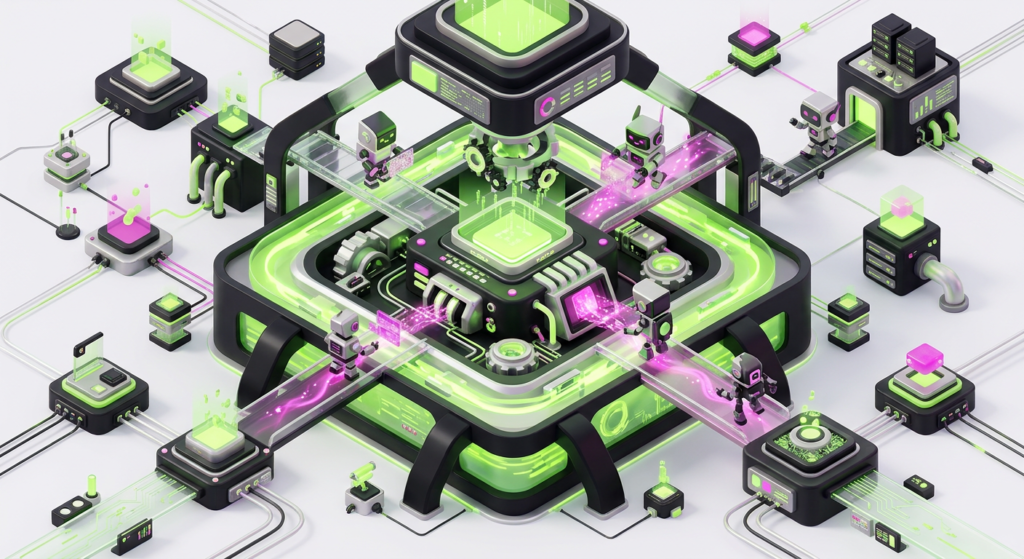
The year 2026 marks a definitive break from human-centric software architecture. Artificial intelligence agents have transitioned from simple chat interfaces to proactive entities that execute complex workflows autonomously. This shift forces a total overhaul of API design principles. Developers no longer build primarily for other developers—they build for autonomous 'agentic' consumers that require hyper-structured data and zero-ambiguity responses.
Agentic user experiences rely on APIs as the connective tissue between an AI’s reasoning engine and external execution tools. When an agent fails to parse a response, the entire workflow collapses. This reality makes machine-readability the top priority. Traditional documentation, once designed for human intuition, must now prioritize schema strictness and predictable error codes that LLMs can interpret without hallucinating.
Memory and persistence have emerged as the next major hurdle in API architecture. While 2025 models often operated as blank slates, 2026 projects like OpenClaw demonstrate the need for stateful context. APIs now serve as the synchronization layer for AI memory across platforms. Without robust state management, agents lose track of multi-step tasks, rendering them useless for enterprise-grade automation.
Efficiency remains a massive financial driver for this transition. Enterprise teams currently face 'tool sprawl,' where fragmented integrations and redundant licensing waste 30% of software budgets. Consolidating these tools requires a sophisticated API strategy that supports more than just REST. Modern enterprise environments now demand native support for Kafka, gRPC, GraphQL, MQTT, and SOAP to handle diverse AI data streams.
Precision in the development cycle has become a non-negotiable requirement. Data from the IBM Systems Sciences Institute reveals that fixing software defects in late-stage development costs 10x more than early detection. In an ecosystem where AI agents trigger thousands of API calls per minute, a single unhandled exception can scale costs exponentially. Rigorous, automated testing is the only way to prevent these financial leaks.
This technical evolution is also dismantling traditional business models. The industry is rapidly pivoting from seat-based pricing to outcome-based pricing. As AI agents automate manual processes and replace human seats, software value is measured by successful executions rather than active users. By March 2026, the 'SaaSpocalypse' has proven that APIs are no longer just features—they are the primary interface for the global economy.