
What happened in the shift to virtual learning?
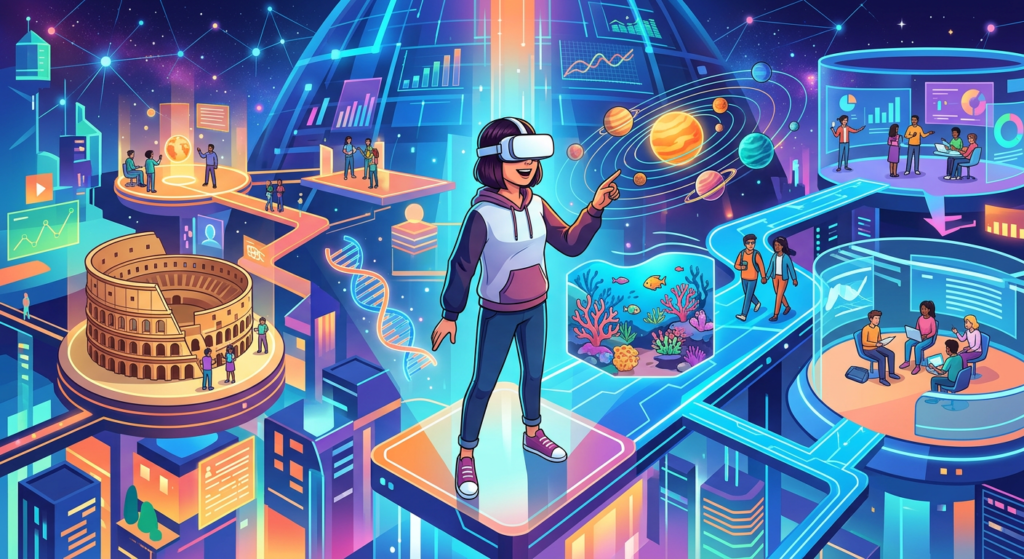
The landscape of modern schooling is undergoing a fundamental transformation as the metaverse in education moves from a conceptual phase into a practical reality. Educational institutions are now looking beyond simple video calls to high-fidelity Virtual Learning Environments (VLE). This shift represents a transition from merely looking at a flat screen to stepping inside a digital lesson. Consequently, the boundaries between physical and virtual space begin to blur as Education in the Metaverse becomes a primary focus for EdTech developers.
Recent data highlights the urgency of this evolution. As of 2026, the online education market has surpassed a valuation of $171 billion, driven by a post-pandemic world where 63% of students interact with online tools daily. However, this growth comes amid a backdrop of significant challenges. In regions like California, students remain roughly 31% of a grade equivalent below pre-pandemic levels. This persistent learning loss has forced educators to seek interactive solutions that can recapture student interest through immersive experiences.
Furthermore, the hardware supporting this transition has reached a critical level of maturity. According to market analysis, devices such as the Meta Quest 3 and Apple Vision Pro are no longer just gaming peripherals. Instead, they are being repositioned as essential classroom tools. These headsets allow for a level of "presence" that traditional remote learning lacks. By enabling students to interact as avatars in real-time, the metaverse addresses the isolation often associated with digital schooling, creating a shared social space that feels authentic.
What has actually changed for students and teachers?
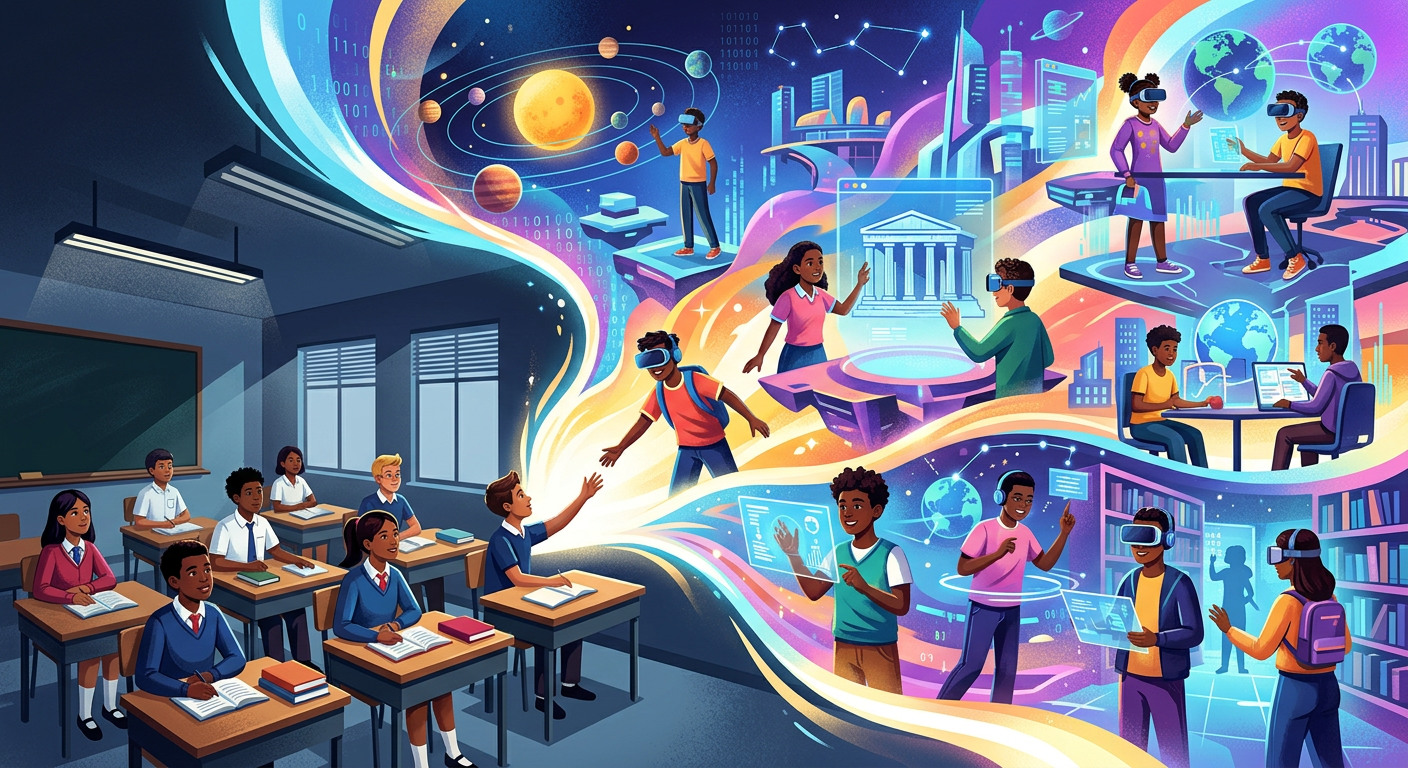
Technically, the metaverse in education introduces a "learning by doing" philosophy that was previously impossible to scale. In the past, visualizing abstract concepts like quantum physics or molecular biology required significant imagination. Now, students can manipulate 3D structures in a virtual space. This experiential approach allows for a deeper cognitive connection to the material. Because the brain processes these virtual interactions with a high degree of realism, the knowledge retention rates often exceed traditional methods.
Moreover, the concept of "failure without consequence" has become a cornerstone of virtual training. In high-stakes fields such as aviation or surgery, the metaverse provides a safe environment for repeated practice. Students can make mistakes, analyze their errors, and restart the simulation without any real-world risk. This iterative process is vital for building muscle memory and confidence. It essentially democratizes high-level technical training that was once reserved for elite institutions with massive budgets.
Nevertheless, the biological impact of these environments is perhaps the most striking discovery. A March 2026 virtual audience study from Michigan State University revealed that the human body responds to virtual environments as if they were real. For instance, a student facing an unsupportive virtual audience during a public speaking exercise experiences genuine physiological stress. This finding confirms that the metaverse is a psychological tool that can train emotional resilience in a controlled setting.
How does the metaverse in education affect the classroom?
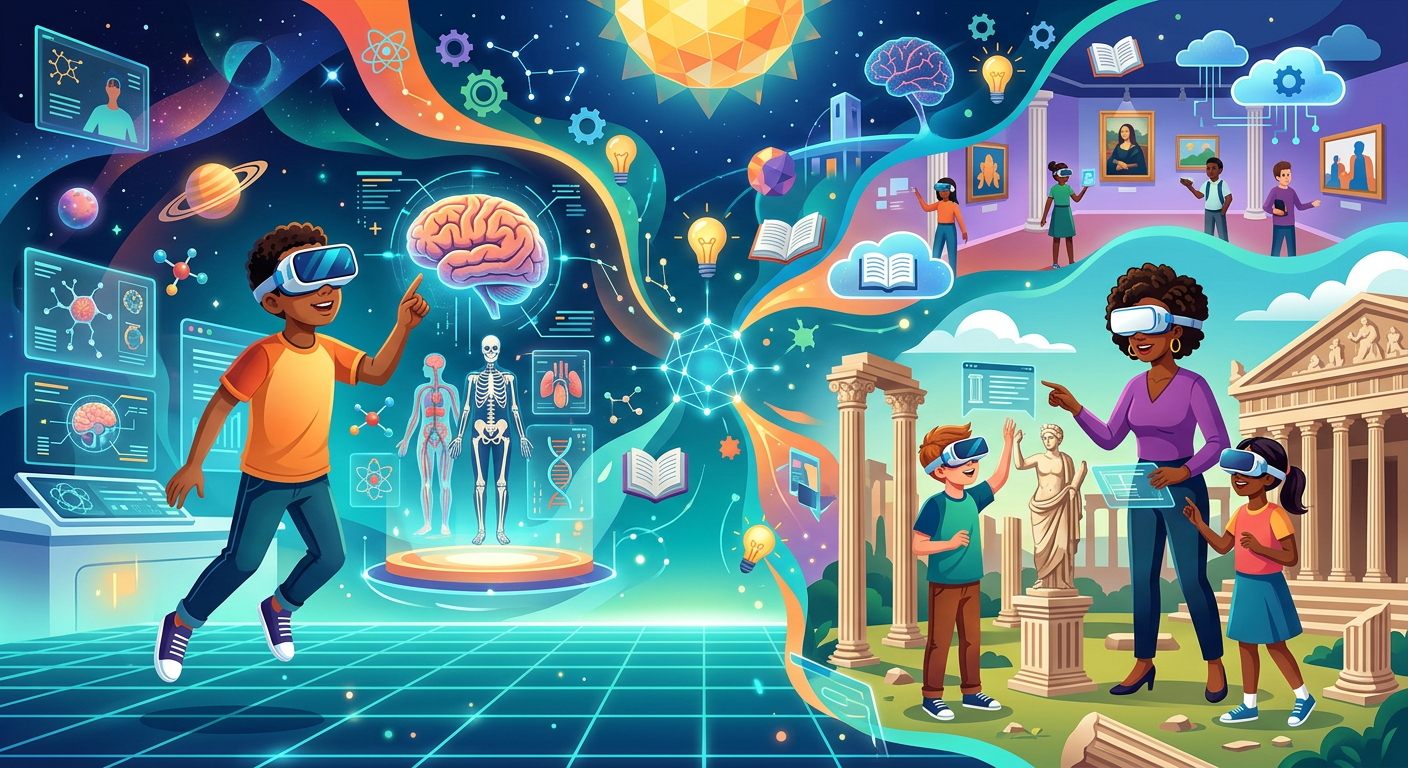
For parents and students, the integration of the metaverse in education means a radical change in the daily routine. These tools offer a way to bridge the gap for the 25% of college students who are now enrolled exclusively online. Instead of feeling like a face in a gallery of video boxes, a student can sit in a virtual lecture hall. They can collaborate on a digital whiteboard and engage in spontaneous conversations with peers, much like they would on a physical campus. This helps mitigate the pandemic effect on social development.
In addition to academic subjects, new initiatives are focusing on the social fabric of digital life. The OR Initiative, launched in February 2026, aims to teach digital discernment and civil discourse in a digital age. As AI-accelerated information becomes more prevalent, students must learn how to navigate complex social issues with empathy. The metaverse provides a unique laboratory for these interactions, allowing educators to guide students through difficult conversations in a moderated environment.
On the other hand, the burden on educators remains a significant concern. While the technology is promising, nearly 1 in 5 teachers currently hold second jobs because inflation has outpaced salary increases. The introduction of the metaverse requires not only new hardware but also extensive teacher training. For the transition to be successful, school districts must ensure that teachers are supported. Without proper funding, the technology could become an additional source of stress rather than a solution.
Final thoughts and recommendations
The rise of the metaverse in education marks a significant milestone in how we perceive the delivery of knowledge. It is not about replacing the classroom, but rather enhancing it with tools that cater to the biological ways humans learn best. By leveraging the power of presence, we can address the learning gaps left by the pandemic. This prepares students for a future where digital and physical realities are inextricably linked.
For parents and educators looking to navigate this new era, we recommend a balanced approach. First, prioritize digital literacy; understanding how to interact in a virtual space is just as important as the subject matter. Second, advocate for equitable access to ensure that the benefits of the metaverse are not limited to wealthy districts. Ultimately, the goal is to use this technology to create a more inclusive and effective educational landscape. Monitoring the long-term effects on health will be essential as we continue to integrate these tools into our daily lives.